





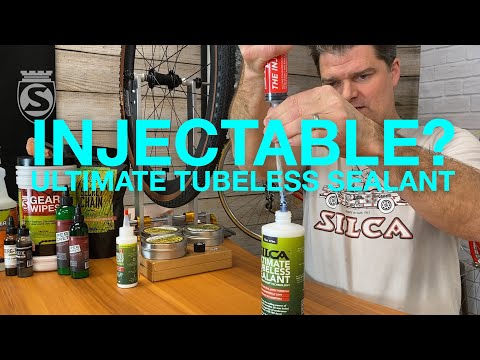

Sellador Ultimate Tubeless Sealant con FIBERFOAM

Sellador Ultimate Tubeless Sealant con FIBERFOAM

Precio habitual $ 18.00 Precio de oferta$ 5.00 Guardar 72%
/
Tamaño

Ultimate Tubeless Sellant utiliza tecnología FiberFoam® para aprovechar la potencia de la fibra de carbono para sellar puntas de hasta 7 mm sin perder presión.

Instrucciones de instalación

El sellador SILCA Ultimate Tubeless Sealant combina el poder de una fórmula de látex espumoso con fibras de carbono picadas para potenciar el sellado, incluso a altas presiones. El 5 % del volumen del sellador Ultimate Tubeless Sealant consiste en fibras de carbono picadas de 6, 9 y 12 mm, recuperadas de bicicletas, ruedas de carbono, coches de carreras y componentes aeronáuticos reciclados. La exclusiva fórmula de látex espumoso permite que las fibras de carbono extremadamente ligeras se dispersen uniformemente al pedalear, una solución que hace posible un mayor contenido de fibra de carbono que al usar Kevlar o fibra de vidrio. Con tal carga de fibras, cuando se produce un pinchazo, el flujo de sellador lleva las fibras de carbono al agujero, donde miles de microburbujas colapsan y depositan las fibras rígidas, creando un «dique» en la carcasa del neumático, de forma similar a cómo las presas que los castores construyen con ramas bloquean los ríos. En pruebas, este dique de fibras de alta rigidez/resistencia ha sellado agujeros de hasta 7,5 mm, algunos incluso un 25 % más grandes que con las tecnologías convencionales.

Una vez que se ha sellado el pinchazo, esa zona del neumático queda recubierta de una capa de látex reforzado con carbono que une las partes superior e inferior del agujero, reduciendo el riesgo de volver a pinchar en el mismo sitio, en comparación con otros aditivos como la harina de maíz, la purpurina o la fibra de vidrio.

Esta mayor capacidad de la fibra de carbono para sellar y reforzar los agujeros también permite una mayor concentración de agentes anticongelantes en el sellador, lo que se traduce en una mayor eficacia a bajas temperaturas (los agujeros de 6 mm se sellan a -7 °C/18 °F) y una mayor duración (de 7 a 9 meses, dependiendo de la humedad) para el sellador.

Recomendamos añadir reponedor cada 90-120 días, dependiendo de la temperatura y la humedad de tu región (consulta la tabla), para rejuvenecer el sellador. El reponedor también puede utilizarse durante la instalación inicial en neumáticos muy porosos. Algunas carcasas son muy porosas y sufren filtraciones de sellador por los flancos. Las pruebas demuestran que esas filtraciones pueden reducir el volumen de sellador en un 30 % durante la instalación, y también acelerar su envejecimiento. Añadir entre un 30 % y un 50 % del volumen de sellador original con el reponedor optimiza el rendimiento y maximiza la vida útil.

NOTA: Los neumáticos con carcasas extraligeras pueden sufrir filtraciones abundantes. Lo hemos observado en neumáticos de marcas como Rene Herse, Veloflex y Teravail, entre otras. Los flancos extremadamente porosos absorben el sellante,¬†provocando un secado prematuro. Para solucionarlo, añade 30 ml (1 oz) adicional de sellador o, una vez montado el neumático, inyecta 30 ml (1 oz) de reponedor.

El CO2, la condensación de los compresores y el talco pueden provocar que se endurezca el sellador. Por este motivo, deben evitarse durante la instalación.

Para obtener los mejores resultados, recomendamos utilizar cintas de llanta de polipropileno tensado (TPP), como las que venden Stan's, Joe's, 3M y Tesa, entre otros. Por lo general, son cintas opacas sin impresiones, mucho más fuertes y resistentes a la abrasión que las cintas basadas en vinilo.

• A partir de 10F/ -12C
• Sellos hasta agujeros de 7,5 mm para hasta 6mo
• Debe verse en neumático durante la instalación
• No es compatible con inyectores (sella agujeros más grandes que
tu válvula)
• Use replenisher cada 90-120 días para mejor
actuación
• Las fibras de carbono recicladas de 6, 9 y 12 mm se dispersan uniformemente por un látex espumante para crear sellos ultra fuertes
• Hecho en los Estados Unidos

Limited Warranty

GARANTÍA LIMITADA DE SILCA

La Garantía limitada de SILCA cubre aquellas piezas que se consideran sujetas a desgaste por el uso normal, o consumibles que sufren degradación a lo largo del uso diario. SILCA garantiza que están libres de defectos de fabricación durante 2 años.

    Frequently asked questions

    Is your Ultimate Sealant compatible with your previous version of sealant?

    No. Our Ultimate Tubeless Sealant should not be mixed with our previous version of sealant or its replenisher for the best results.

    Does this sealant contain ammonia?

    No. Our sealant does not contain ammonia and is safe to use on cotton tire casings.

    Does this sealant require a replenisher?

    No. This sealant does not require a use of a replenisher. It has been tested to have a lifespan of 6+ months in a tire and can be topped off with itself at that point or if sealant is lost from a puncture.

    Is this sealant compatible to be injected into all valves?

    This sealant is compatible with most valves esspecially those with removable valve cores. Because of the fibers in this sealant, it has been tested to not be compatible with Filmore Reserve Valves.

    How much of this sealant should I use in my tire?

    Please see the chart on our webpage to find the ammount of sealant you will want to install in your tire. If you are installing this sealant into a new tire, please consider adding an extra ounce of sealant during this first installation.

    How often do I need to replenish this sealant?

    This sealant should be re-installed every 6 months for the best results. If you do lose some sealant from a puncture, top off your sealant at this time.

    Can I use any air pump with this sealant?

    You can use any air pump with this sealant, but a hand or floor pump is prefered. If using an aircompressor, please ensure that it is properly drained so that your sealant will not be contaminated. If you are using CO2 while on a ride, deflate the Co2 and re-inflate your tire with a hand or floor pump when you return home for the best results.

    How affective is this sealant?

    This sealant has been tested to seal punctures up to 6mm. This sealing ability can be affected by the thread count in your tires, the shape of the puncuture, and the cause of the puncture.

    How do I keep this sealant from clogging my valve?

    To help prevent this valve from clogging, add a small ammount of Synergetic to the removable core and store your tire with the valve at the 6o'clock position.

    How do I remove this sealant from my clothing?

    The sealant is best to get out in the first 30 minutes, after it dries, it becomes much harder to get out. Also, washing your clothes will make it harder to get out. Here's a recommended method for removing sealant from fabric:1.Blot up or scrape off the excess2.Rinse the spot in running water to flush out as much sealant as possible.3.Treat the spot with equal parts dishwashing liquid and warm water.4.Pre-treat the spot with commercial stain remover, and then wash the garment as you would normally. - If these steps do not work, you may try our Sealant Remover. Please use this with caution on synthetic materials.

    Can I use this sealant in a tire that was used with another brands sealant?

    Yes, you can use our sealant in a tire that was used with another brands sealant. Please ensure that any dried or liquid sealant is removed from your tire before installing our sealant for the best results.

    What the shelf life of unopened sealant?

    We recommend that this sealant be used within 3 years for the best results when stored in a temperature-controlled environment away from UV exposure.

    What the shelf life of opened sealant?

    We recommend that this sealant is stored at room temperature, away from UV, and tightly sealed once opened. We recommend that this sealant is used with in 18 months for the best results.

    What rim tape should I use with your sealant?

    Our sealant will work best with the SILCA Tubeless Rim Tape or an alternative rim tape that is composed of TPP.

    Can I store my bike for the winter with sealant installed in the tires?

    If you are storing your wheels or bike for the winter or an extended period of time, we highly suggest regularly maintaining your sealant. We would personally recommend checking the sealant level by shaking the tire and listening for a 'liquid' sound, and if the sound is not present, go ahead and top off your sealant. I would also recommend spinning the tires around once a week to keep the sealant in motion

    Can SILCA Ultimate Sealant be used in tubes?

    We do not recommend that tubes are filled with or used in comination with any sealant. When sealant is used in combination with a tube, it will likely not be able to active properly. Tubes can be used to fix a flat in a tire whose puncture was too large for sealant alone to seal it.